

Fraud rarely announces itself with flashing lights. It works quietly, exploiting gaps in oversight, trust, and accountability until the numbers no longer add up.
In 2023, a regional finance firm learned this lesson the hard way when an accounts payable clerk siphoned nearly $2 million through duplicate invoices and manipulated ledger entries. The scheme ran for 18 months before anyone caught on. What struck the CFO most wasn’t the complexity, it was the simplicity. A handful of small, repeated acts had drained millions, right under the noses of auditors and managers.
The Association of Certified Fraud Examiners (ACFE) estimates that organizations lose 5% of revenue each year to fraud, translating into billions of dollars globally. For mid-sized companies, that percentage often means the difference between hitting profit targets and missing them. Even public companies report known fraud losses around 1.06% of revenue, but when factoring in undetected schemes, researchers believe the true impact approaches 2.5% or more.
The Hidden Shape of White-Collar Crime
White-collar crime is often misunderstood as something confined to Wall Street headlines. In reality, most fraud looks much more mundane. According to the ACFE’s 2024 Report to the Nations, the vast majority of cases involve asset misappropriation: billing fraud, fake vendors, padded expense reports, or non-cash theft of inventory and supplies.
- Nearly nine in ten fraud cases involve some form of asset misappropriation.
- Corruption, including bribery and kickbacks, appears in almost half of all cases.
- Financial statement fraud, while rarer, delivers the largest blows when it happens: bankruptcies, regulatory penalties, and criminal charges.
On average, fraud schemes last 12 months before detection. That means companies are often bleeding for a year or more before they even know something is wrong. Billing schemes alone account for median losses of $100,000, while non-cash theft averages $66,000 per case.
Why do these schemes linger so long? Because they are designed to blend in. Small, repetitive acts often slip under thresholds that trigger reviews. Many rely on personal trust in long-tenured employees. And in a world reshaped by remote work, stretched audit teams, and economic strain, opportunities are multiplying.
Why Companies Don’t See It Coming
Executives are often surprised when fraud is uncovered in their organizations. “We trusted that person,” is a common refrain. But trust, without verification, is the very gap fraudsters exploit.
Three factors make detection especially difficult today:
- Scale of digital systems: ERP platforms and cloud accounting make processes more efficient but also create more points of vulnerability. A single overlooked permissions setting can give an employee unauthorized access to financial workflows.
- Remote and hybrid work: Dispersed teams and reduced in-person oversight mean anomalies can go unnoticed. The ACFE found that over half of fraud cases cited pandemic-related factors as contributors.
- Cultural blind spots: Many companies lack a culture of accountability. Executives assume fraud is rare, when in fact it is both common and costly. Employees learn quickly whether leadership is serious about controls or whether shortcuts are tolerated.
Historical Lessons: When Oversight Failed
History is filled with cautionary tales. The WorldCom scandal in the early 2000s revealed $3.8 billion in fraudulent accounting. The company’s internal audit team uncovered the scheme, but only after years of manipulation. The fallout was swift: bankruptcy, criminal convictions, and the passage of Sarbanes-Oxley, which reshaped corporate governance in America.
While few mid-market companies will face WorldCom-level fraud, the principle holds: controls on paper mean little without active enforcement and a culture of transparency.
Detecting Fraud Before It Becomes a Headline
So how can today’s executives improve their odds of catching fraud before it metastasizes? The answer lies in combining strong controls with proactive intelligence.
Strengthen Internal Controls
Segregation of duties remains the gold standard: no single employee should be able to authorize, execute, and record the same transaction. Regular reconciliations of bank statements, payroll, and vendor accounts are essential. But controls are only as strong as the people enforcing them. Complacency is a fraudster’s ally.
Leverage Data Analytics
Fraud detection no longer has to rely on manual review. AI-enabled platforms can now scan thousands of transactions in minutes, flagging anomalies such as duplicate invoices, unusual vendor activity, or suspicious timing of journal entries. The best systems reduce noise by focusing on patterns most associated with fraud.
Foster a Culture of Accountability
Tone at the top matters. Executives who emphasize ethical behavior, transparency, and zero tolerance for misconduct set a standard that cascades downward. Whistleblower hotlines and mandatory vacation policies are simple cultural mechanisms that uncover schemes earlier. Employees who refuse time off often fear their fraud will unravel in their absence.
Prepare an Investigation Playbook
When fraud is suspected, panic often leads to missteps. A corporate investigation must preserve evidence, maintain discretion, and comply with legal standards. Having a pre-defined playbook that includes who leads, how evidence is collected, when to involve counsel, etc. can save both time and reputation.
The Executive Perspective
For COOs, CFOs, and General Counsel, fraud is not just a compliance issue. It’s a strategic risk that can erode financial performance, weaken customer trust, and expose the company to legal liability.
Consider the math: if a $100 million company loses 5% of revenue to fraud, consistent with ACFE’s estimate, that’s $5 million gone annually. Compare that to the cost of preventive measures: internal audits, fraud detection software, and staff training often represent a fraction of the potential loss.
Insurance carriers are also taking notice. Firms with strong fraud prevention programs often see lower premiums and smoother claims processing. Investors and boards increasingly expect fraud risk to be part of enterprise risk management discussions.
The Cost of Inaction
Executives sometimes assume fraud prevention is an expense with no return. The evidence says otherwise. In fact, the return on investment is direct and measurable.
- Companies with hotlines detect fraud 50% faster than those without.
- Proactive data monitoring reduces fraud duration by half.
- Organizations that conduct regular internal audits lose almost 60% less per scheme than those that do not.
The real cost lies in inaction: lost capital, reputational damage, and regulatory scrutiny.
Conclusion
White-collar crime doesn’t strike like a thunderstorm. It drips, slowly and quietly, until the bucket overflows. For executives, the challenge is not just reacting when fraud is discovered but anticipating where it might arise and putting safeguards in place before losses mount.
Fraud doesn’t wait until your next audit cycle. If you don’t have clear answers about where your vulnerabilities are, now is the time to act. At Chesley Brown, we help leadership teams strengthen controls, uncover hidden risks, and build investigative protocols before problems escalate. Because when your reputation and revenue are on the line, waiting is the most expensive option.
Sources
- ACFE Occupational Fraud 2024: Estimated 5% cost of revenue
- Public companies’ known fraud losses at 1.06% of revenue, but estimated at 2.5% total
- Median fraud duration: 12 months, $9,900 monthly loss
- Breakdown of fraud types: 89% asset misappropriation, 48% corruption
- Billing vs. non-cash misappropriation stats
- WorldCom case summary
Sign up!
For industry-leading guides and analysis sign up for our blog below.
Latest News

Brand Protection: How Businesses Can Identify and Stop Intellectual Property Theft
Adam Shipley was furious. He spent years building up his company’s brand of elite fishing gear, and now someone was selling counterfeits — even using lookalike packaging — through a half-dozen online marketplaces. At half…

Dell Spry Promoted to Vice President Emeritus
Dell Spry is an attorney by education a investigator by passion. He has been in law enforcement for over 30 years. In that time he served in the FBI as a Supervisory Special Agent and…

Why your business may need an asset search
Written By: James Hart Linda Daly didn’t know exactly what was wrong, but something was off about her latest business deal. A month earlier, Daly – the owner of a midsize retail chain in the…

How to Secure Intellectual Property and Trade Secrets
Anything that has value is at risk of being stolen, and unfortunately, that includes your company’s ideas and information. After all, intellectual property generates tremendous value in today’s economy. In 2019, American industries that rely…

How to Respond to a Whistleblower’s Report
In theory, it should be a good thing when employees come forward with a whistleblower report. They’ve spotted a threat to your organization and are giving you the insight you need to address the problem…
Outsourced. Exposed. Out of Time.
What every executive needs to know about the new threat landscape—and how to respond before it's too late.
This paper reveals why the traditional guard model is collapsing—and how foreign-owned vendors are putting U.S. enterprises at risk. Get the full breakdown of how to audit your vendor stack, modernize your access control, and de-risk your real estate portfolio.
"*" indicates required fields
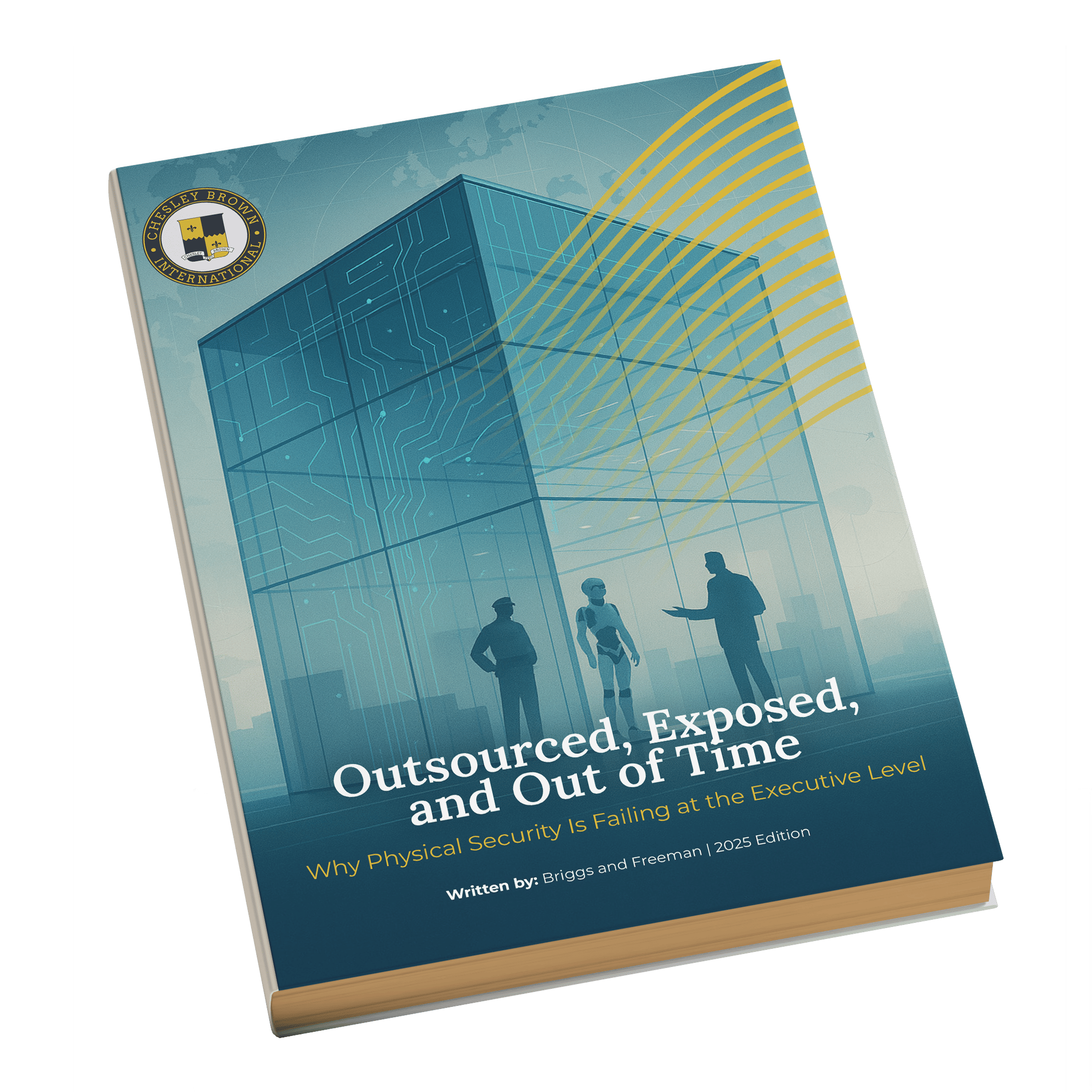
Outsourced. Exposed. Out of Time.
Outsourced. Exposed. Out of Time.
What every executive needs to know about the new threat landscape and how to respond before it's too late.
This paper reveals why the traditional guard model is collapsing, and how foreign-owned vendors are putting U.S. enterprises at risk. Get the full breakdown of how to audit your vendor stack, modernize your access control, and de-risk your real estate portfolio.
"*" indicates required fields