

For decades, organizations have leaned on traditional outsourced security models like uniformed officers, integrators, and legacy third-party vendors. But the world they were built for no longer exists.
Cyber-physical convergence, foreign-owned suppliers, rapid threat evolution, and regulatory pressure are rewriting the rules in real time. Executives are asking harder questions, stakeholders expect transparency and resilience, and boards can no longer afford assumptions about “business as usual.”
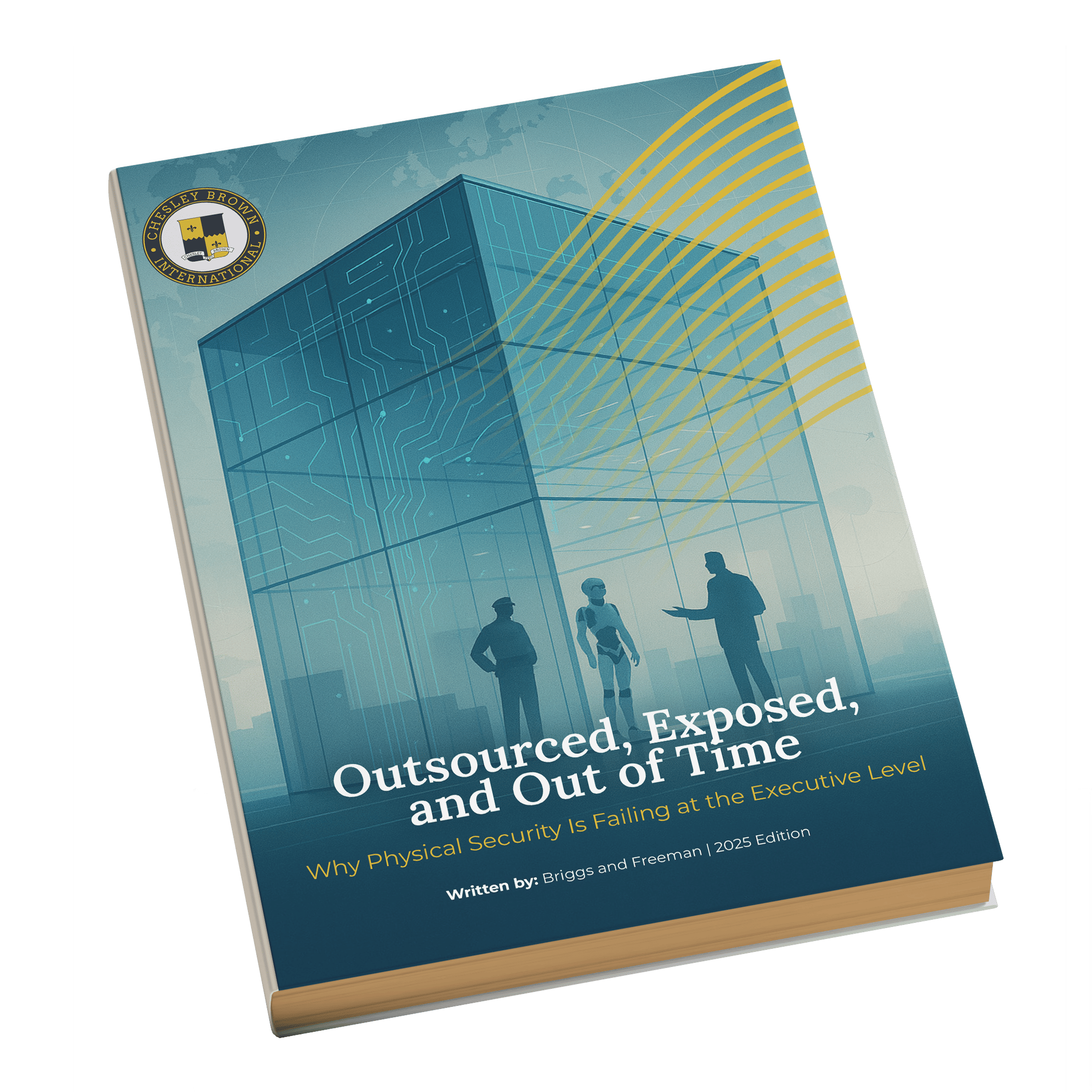
Our new white paper, “Outsourced, Exposed, and Out of Time: How Physical Security Is Failing Executives”, examines how legacy approaches are falling behind, and where forward-thinking leaders are already moving.
Inside the report:
- The growing risk of blind trust in traditional outsourced security models
- The hidden supply-chain vulnerabilities few executives are being briefed on
- Why foreign-owned vendors matter more than ever
- Emerging regulatory and governance pressures shaping security strategy
- The shift from guard force management to intelligence-driven executive protection
- How leading organizations are modernizing security leadership and oversight
This isn’t a hypothetical future. It’s happening now. Executives and boards who adapt early will gain a competitive, operational, and reputational advantage. Those who don’t will inherit risks they never saw coming.
Download the white paper below to explore the full analysis and actionable guidance for leadership teams navigating this new security landscape:
Outsourced. Exposed. Out of Time.
What every executive needs to know about the new threat landscape and how to respond before it's too late.
This paper reveals why the traditional guard model is collapsing, and how foreign-owned vendors are putting U.S. enterprises at risk. Get the full breakdown of how to audit your vendor stack, modernize your access control, and de-risk your real estate portfolio.
"*" indicates required fields
Sign up!
For industry-leading guides and analysis sign up for our blog below.
Latest News
risk-takers #1 The Aldrich Ames Espionage Case
Dell Spry, a former FBI investigator and counterespionage expert, sits down to discuss the biggest case of insider theft in U.S. History: The Aldrich Ames Case. Hear how he, along with the help of the CIA, and the fellow FBI agents used their cunning, hard work, and old fashioned investigative work to capture and convict most infamous CIA officer-turned traitor: Aldrich Hazan “Rick” Ames. Beginning in 1985 the CIA experienced the unparalleled loss of its of Soviet assets, which nearly destroyed the government’s ability to gather intelligence on the Soviet Union. In this interview Mr. Spry discusses his personal involvement in the case as the FBI’s lead investigator including many of the investigative methods they used. Hear never before details about the harrowing investigation to not only investigate and convict the highest ranking government official ever accused of spying, but to protect future Russian assets. In 1991, the quest led them to search for a Soviet spy in the CIA. They came to identify that spy as CIA Case Officer, Aldrich Hazan “Rick” Ames, a long-time CIA case officer and analyst. In February of 1994, Ames was arrested by the FBI and sentenced to life in prison.

10 Steps for Building a Crisis Management Communication Strategy
Small changes have a big impact. As a public health crisis of worldwide proportions comes into focus, it is imperative for individuals, organizations, and nations to develop effective resilience strategies, including communications and outreach as…

7 Tips the Pros Won’t Tell You About Budgeting For Risk
Every business must create its own process for identifying, testing, and budgeting for risk. We studied the data and talked to several industry-leading CSOs to find out how they do it. How much should your…

The Future of Work
The Future of Work: Protecting Trade Secrets Written by: Dell Spry Many businesses, both large and small, are desperately seeking ways to keep their companies operational with all of the closures and uncertainties associated with…

Managing Risk During a Pandemic
5 Tips for Conducting Better Risk Assessments for a Pandemic In earlier sections, we discussed the need for a risk-based approach and outlined 6 New Business Risks to consider when preparing your business for coronavirus.…
Outsourced. Exposed. Out of Time.
What every executive needs to know about the new threat landscape—and how to respond before it's too late.
This paper reveals why the traditional guard model is collapsing—and how foreign-owned vendors are putting U.S. enterprises at risk. Get the full breakdown of how to audit your vendor stack, modernize your access control, and de-risk your real estate portfolio.
"*" indicates required fields
Outsourced. Exposed. Out of Time.
Outsourced. Exposed. Out of Time.
What every executive needs to know about the new threat landscape and how to respond before it's too late.
This paper reveals why the traditional guard model is collapsing, and how foreign-owned vendors are putting U.S. enterprises at risk. Get the full breakdown of how to audit your vendor stack, modernize your access control, and de-risk your real estate portfolio.
"*" indicates required fields